Grocery Store vs Franchise Store: Which is Better for You?

FMCG Grocery Franchise in 2025

Introduction: The Everyday Dilemma

Picture this: It’s Saturday morning. You’ve ticked off eggs and milk, now you’re juggling rice, flour, biscuits, soap, and tea on your list.

At the street corner, two options await:

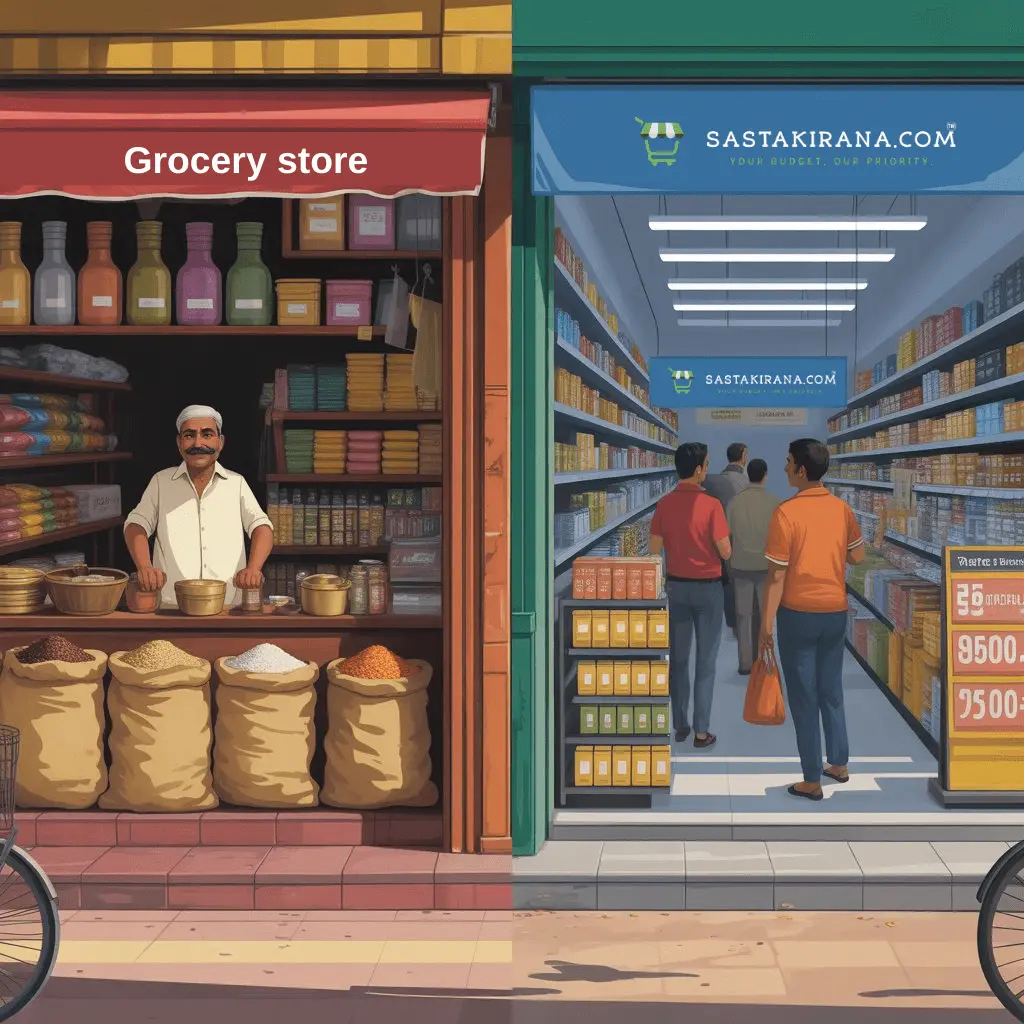
To your left: Your neighbourhood grocery store—small, familiar, run by the uncle who remembers your orders. To your right: A sleek FMCG franchise outlet with tidy aisles, bright lights, and banners shouting discounts.

Which do you pick?

For decades, grocery shops have anchored Indian households. But the rise of organized FMCG retail—especially in tier-2 towns and rural areas—is reshaping the retail landscape. The decision isn’t just about convenience anymore—it’s about value, trust, and the future of shopping.

According to IBEF (2024), India’s retail market is expected to reach US $2 trillion by 2032, with the FMCG sector contributing nearly 50% of consumer spending.

With such growth, choosing the right business model isn’t just about survival—it’s about scalability, profitability, and trust.
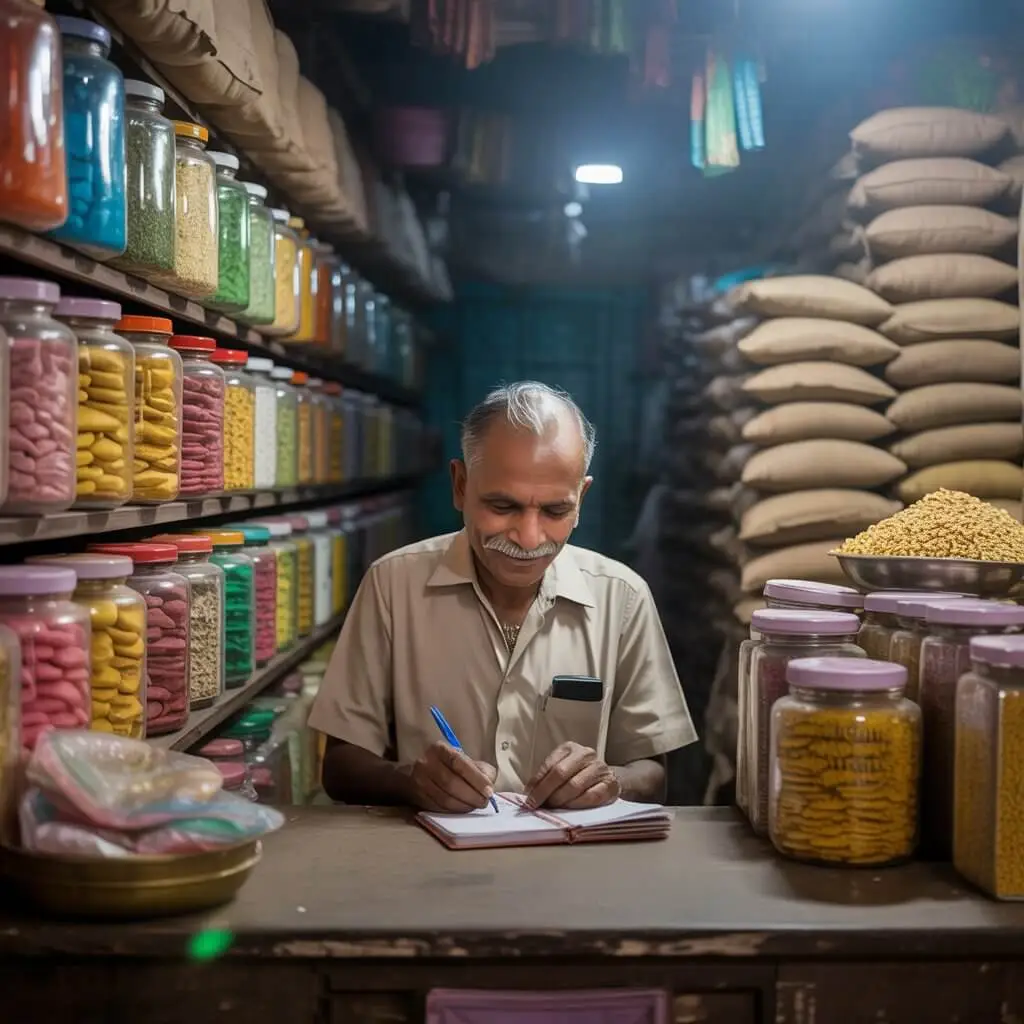
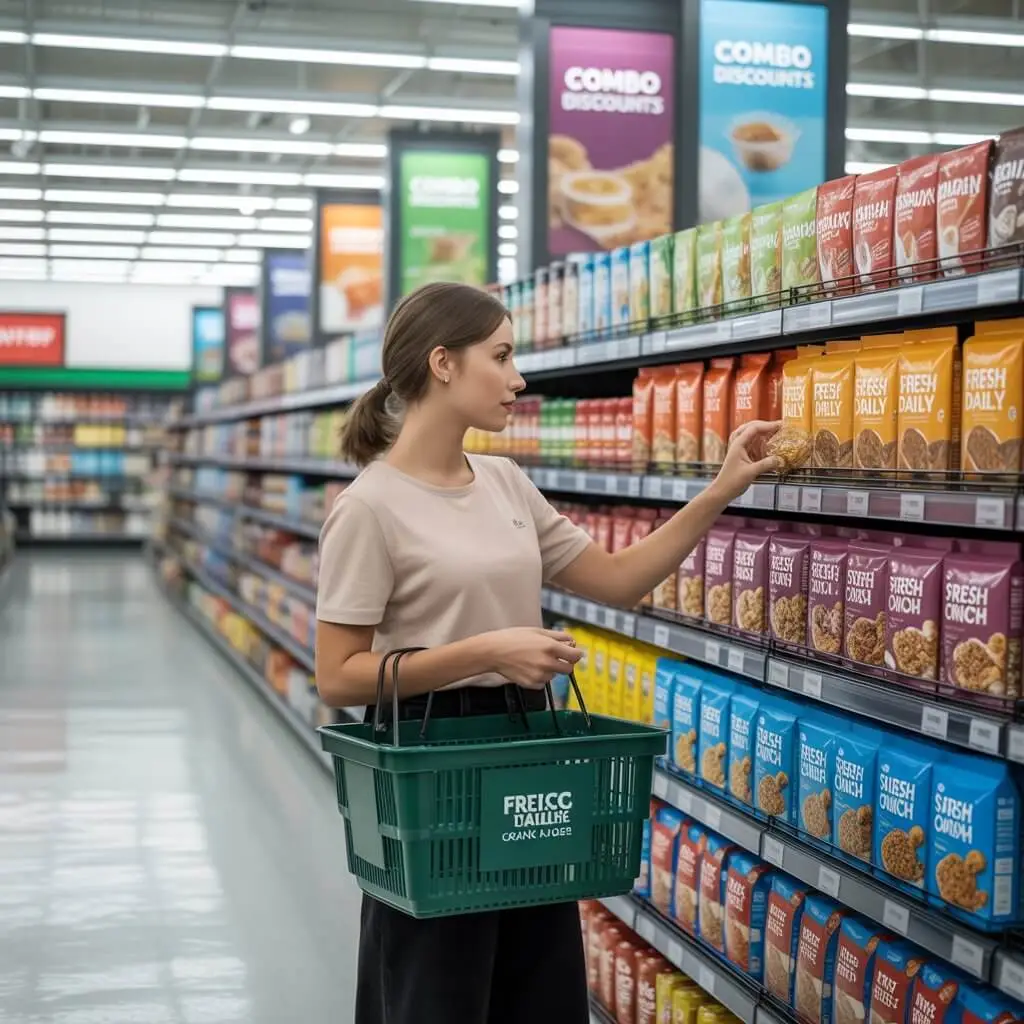
Table of Contents

  • What is a Grocery Store?
  • What is an FMCG Store?
  • Grocery Store: Pros & Cons
  • Franchise Store: Pros & Cons
  • Investment & ROI Comparison
  • Branding, Trust & Market Entry
  • Case Study
  • Conclusion – Which One Should You Choose?
  • FAQs

What is a Grocery Store?

Traditional Kirana Store

A traditional kirana store is the heart of many Indian neighborhoods.

In India, traditional grocery shops are not just places to buy food—they are a cultural institution. These small, family-owned shops are often passed down from generation to generation, becoming a trusted part of the neighbourhood.

Why Kirana Stores Matter
  • Personalized Service: The shopkeeper, often called “uncle” or “bhaiya,” remembers your preferences. He knows which brand of tea you drink, which biscuits your kids love, and might even extend credit (udhaar) when your monthly budget runs tight. This creates a strong sense of trust and familiarity.

While kiranas bring warmth and trust, they face certain challenges in the modern retail landscape:

  • Limited Inventory: Space is tight, so the range of products is small. You may not find premium, imported, or trending FMCG items.

As per Statista (2024), over 12 million kirana stores dominate India’s retail market, accounting for 88% of total grocery sales.

What is an FMCG Franchise Store?

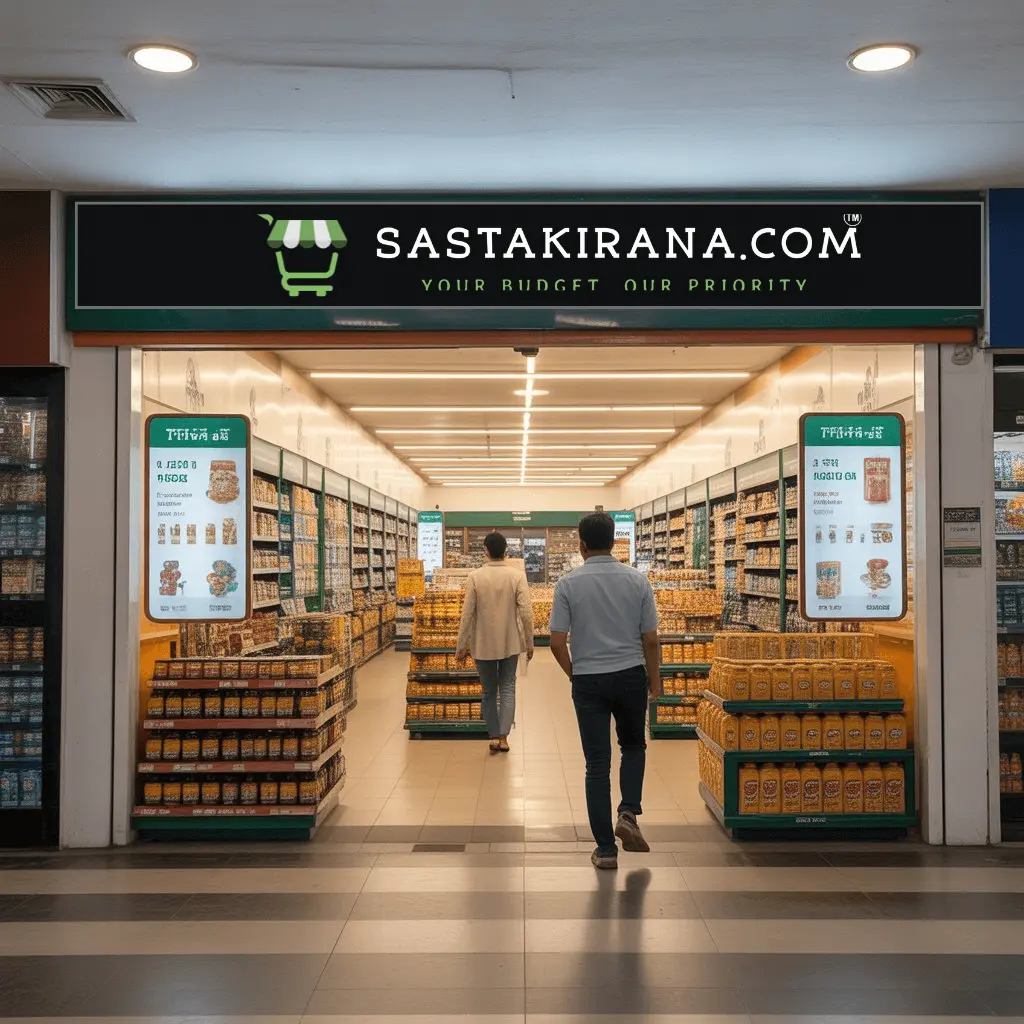
Modern FMCG Franchise Store

An FMCG (Fast-Moving Consumer Goods) franchise store is a modern retail outlet that operates under the umbrella of an established brand. Unlike small grocery shops, these stores are part of a well-structured retail network designed to sell daily essentials—such as packaged food, beverages, toiletries, and personal care items—under a recognized and trusted brand name.

Think of it as the middle ground between a traditional grocery shop and a supermarket. You get the warmth of local shopping but with the professionalism, transparency, and efficiency of an organized retail model.

In a SastaKirana franchise, customers can expect:

  • An organized shopping experience – Clearly marked aisles, wide product categories, and neat displays of both local favorites and nationally trusted brands.

In short, FMCG franchise stores go beyond just selling products. They bring in clarity, trust, savings, and consistency—offering customers not only goods but also a better shopping experience.

Grocery Store: Pros & Cons

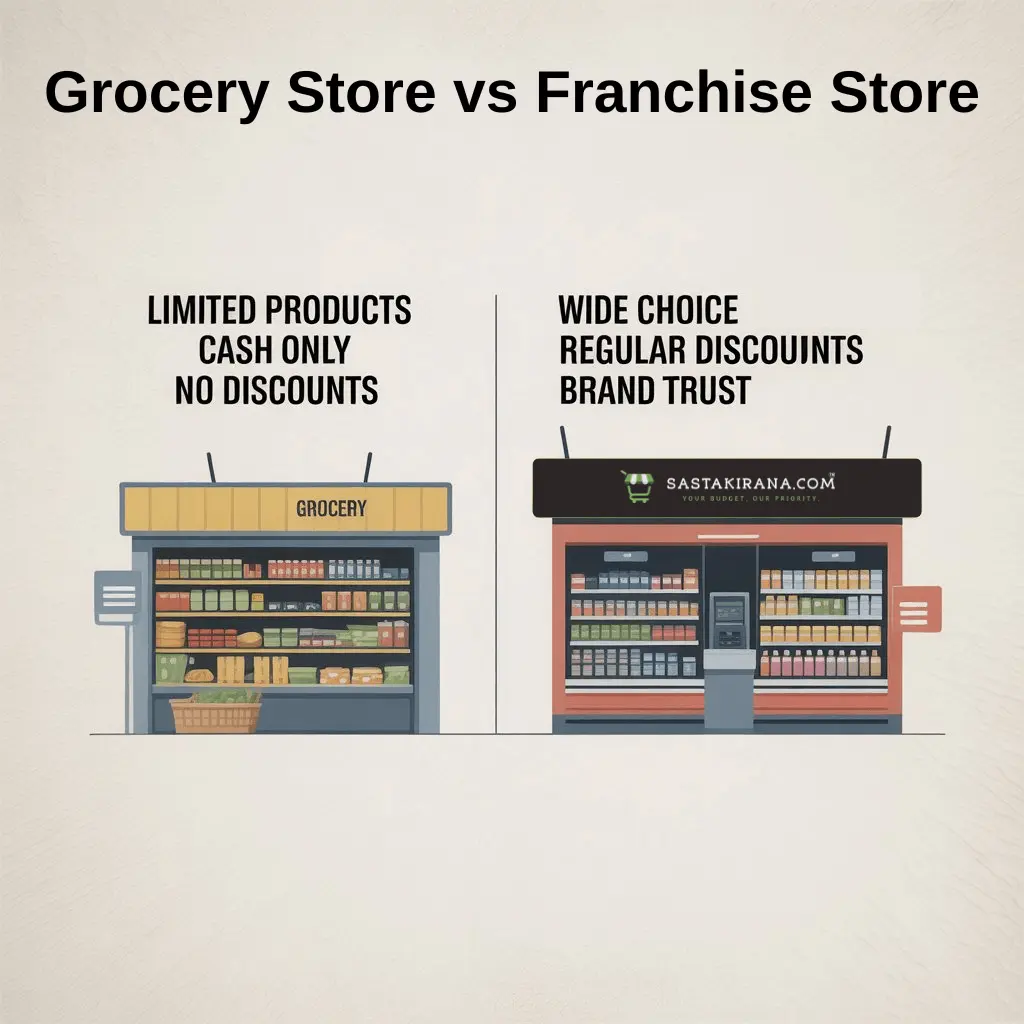
A visual comparison of the pros and cons of grocery stores vs franchise stores

Running your own grocery store gives you independence, but it also comes with challenges. Here are the key pros and cons:

Advantages of Owning a Grocery Store
  • Complete Control: You make all the decisions, from pricing to suppliers.
  • Creative Freedom: You can experiment with products and discounts without approvals.
  • Local Connect: Strong personal relationships with customers build loyalty.
  • Profit Retention: You keep all the profits.
Disadvantages of Owning a Grocery Store
  • High Initial Struggle: Requires significant effort in setup and negotiations.
  • Risk of Competition: Big brands may overshadow your business.
  • Limited Resources: Technology and marketing often remain basic.
  • Slow Growth: Scaling up takes time without structured support.

Franchise Store: Pros & Cons

An infographic showing the pros and cons of owning a franchise store

Franchises provide structured business opportunities, but they also come with rules. Let’s break it down:

Advantages of a Franchise Store
  • Brand Recognition: Customers already trust the brand, giving you a faster start.
  • Scalable Model: Easier to expand with a proven business model.
  • Training & Support: Franchisors provide guidance, reducing challenges.
  • Technology & Logistics: Access to established systems and supply chains.
Disadvantages of a Franchise Store
  • Higher Investment: Initial franchise fees and setup costs are often higher.
  • Restricted Freedom: You must follow the franchisor’s rules.
  • Shared Profits: Royalties or commissions reduce your earnings.
  • Reputation Dependence: If the brand suffers, your store is also affected.

Investment & ROI Comparison

Grocery Store:
  • Requires low upfront investment.
  • Success depends heavily on location and customer loyalty.
  • Profit margins are modest, and stability may take time.
  • On average, ROI can take 3–5 years.
Franchise Store:
  • Involves a higher initial setup cost.
  • Benefits from a ready-made brand reputation that attracts customers.
  • Standardized processes reduce operational risks.
  • With strong brand pull, ROI can often be achieved in just 18–24 months.

Branding, Market Entry & Trust

Grocery Store:
  • Slow Branding Process: Must create your own identity from scratch.
  • Customer Trust Building: Trust grows gradually through word-of-mouth.
  • Market Entry Challenge: Must rely on pricing or convenience to attract customers.
  • Reputation is Localized: Reputation is usually limited to a small area.
Franchise Store:
  • Pre-Built Branding: Benefits from the parent company’s established reputation.
  • Instant Trust Factor: Customers have confidence in quality and pricing.
  • Easier Market Entry: The brand name attracts the first wave of customers.
  • Wider Market Recognition: Credibility extends across cities or even nationwide.

Support, Technology & Operations

Grocery Store: Most independent stores rely on manual billing and traditional stock management. Operations depend on the owner’s personal experience and supplier relationships.

Franchise Store: Franchise outlets come with modern retail technology and support, including:

  • POS (Point of Sale) systems for easy billing and sales tracking.
  • Centralized procurement for consistent quality and pricing.
  • Data-driven stocking to prevent shortages.
  • Loyalty programs & digital payments to enhance customer retention.

Facts & Market Statistics You Should Know

  • Franchising market in India: ~INR 800B (~US$10B ), growing 30–35% annually.
  • India is the 2nd largest franchise market globally with 4,600 franchisors & 200,000 outlets.
  • The franchise sector generates 1M+ jobs, contributing ~2% of GDP.

Case Study

Ramesh, a teacher from Lucknow, struggled with his local grocery store—limited stock and high prices. After shifting to a SastaKirana Franchise Store, he saved ₹700 in a month, enjoyed UPI payments, and shopped in a clean, organized store. This shows how SastaKirana blends kirana familiarity with modern retail efficiency, creating savings for customers and low-investment opportunities for entrepreneurs.

Conclusion – Which One Should You Choose?

When deciding, consider these key factors: your investment budget, risk tolerance, and growth expectations. A self-owned grocery store gives independence but requires hard work. A franchise store offers structured growth but requires following rules.

If you want independence & community ties → a grocery store is a great choice.

If you want brand trust, technology, and faster ROI → a franchise is smarter.

The future of grocery shopping isn’t about “just buying”—it’s about buying smart.

FAQs: Grocery Stores vs. Franchise Stores

  • Q1. Are franchise stores always cheaper than grocery stores?

    Mostly yes, due to bulk supply. But grocery stores sometimes offer local discounts.

  • Q2. Can a grocery store upgrade into a franchise model?

    Yes! Many grocery stores partner with franchise networks to transform.

  • Q3. Do FMCG franchise stores work in rural areas?

    Absolutely! With rural FMCG demand expected to reach US$220B by 2025, franchise stores are expanding fast.

  • Q4. Which is better for customers?

    Both have value: grocery stores offer a personal touch, while franchises ensure quality and better deals.

  • Q5. How can I start a SastaKirana store?

    Visit www.sastakirana.com for franchise details and guidance.