Introduction
Have you ever walked into a grocery store and noticed how every customer behaves differently? Some rush in and pick only what they need, some compare prices for every item, and some look completely lost. These behaviours may seem random, but they follow a pattern.
And if you’re planning to open a grocery franchise or already running a store, understanding these patterns becomes one of your biggest strengths. Customer behaviour decides everything — footfall, repeat visits, store loyalty, and long-term growth.
In India, people don’t choose grocery stores just for products. They choose familiarity, trust, comfort, convenience, and yes — sometimes the smallest savings. Let’s explore what really influences customers inside a grocery store.
2. Prices & Savings Influence Decisions
Indian families love savings — even if it's ₹5 or ₹10. It’s not about being cheap; it’s about being smart.
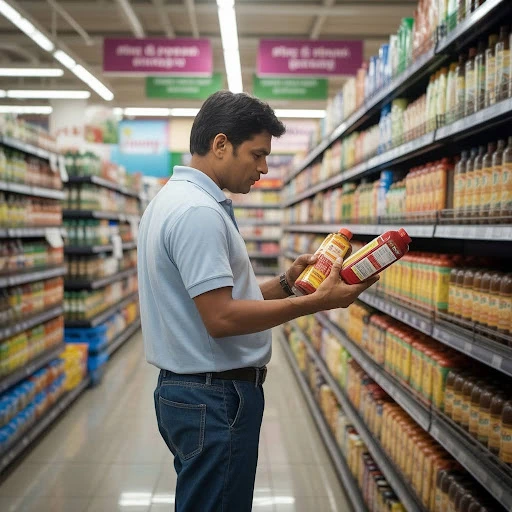
Customers compare:
- Oil brands
- Rice varieties
- Detergent packs
- Biscuit offers
- Combo deals
They want value.
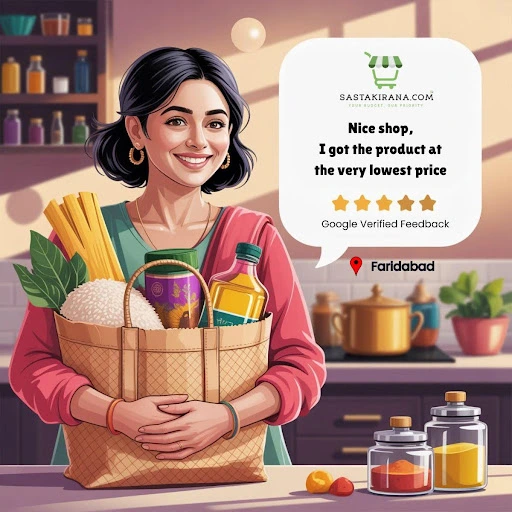
If your store maintains fair pricing and visible savings, customers will automatically return.
3. Availability of Essentials Builds Trust
Imagine a customer enters your store expecting milk, bread, oil, sugar, or a specific brand — and it’s out of stock. They feel disappointed. If this happens often, they silently switch to another store. Daily essentials influence customer behaviour the most.
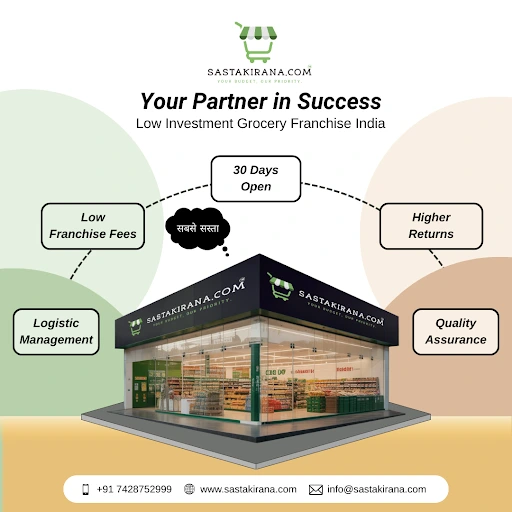
Some organized models support new store owners by helping them start with:
- Store layout finalisation
- GST / APOB assistance
- Shop & Establishment licence
- FSSAI licence support
- Rack setup + infrastructure
- Signage & facade setup
- IT system setup and POS
- One-month store launch assistance
These help stores begin operations with complete stock planning and an organised setup for more detailed check sastakirana.
4. Store Layout Matters More Than You Think
Have you noticed how some stores feel easy to navigate and others feel confusing?
A good layout influences customer behaviour by:
- Making products easier to find
- Encouraging customers to explore more
- Increasing time spent in-store
- Creating a comfortable flow
Walking space, organised shelves, and visible categories make a big difference in how customers shop.
5. Cleanliness = Customer Confidence
Clean racks, dust-free products, bright lights, and a fresh environment automatically make customers trust a store more.
A clean store communicates:
- Professionalism
- Care
- Hygiene
- Quality
If your store looks good, customers automatically feel good about buying from you.
6. Friendly Staff Shape Customer Experience
Sometimes customers stay loyal not because of products, but because of people.
Staff behaviour matters:
- Greeting customers
- Helping them find items
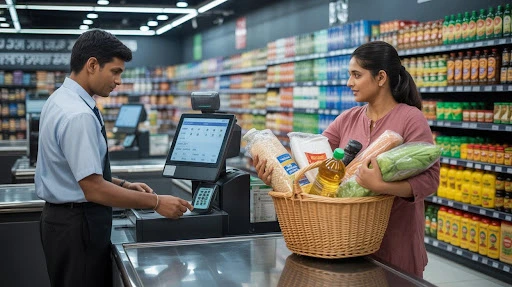
- Quick billing
- Handling returns politely
- Having product knowledge
Many times a simple “Madam, aapko kya chahiye?” creates a connection customers remember.
7. Quick Billing & Technology Make Shopping Smooth
People don’t like waiting in long queues.
Fast billing influences behaviour:
- POS systems
- Barcode scanning
- UPI payments
- Price accuracy
- Clean receipts
A smooth billing experience makes customers return.
8. Product Variety Influences Time Spent
When customers find multiple options in the same category — premium, budget, local, branded — they feel the store “has everything.”
Variety increases:
- Store preference
- Time spent
- Satisfaction level
It also reduces the chances of them hopping to another store.
9. Local Reputation Creates Strong Behaviour Patterns
Grocery stores live and grow through word-of-mouth.
People trust what their:
- Neighbours say
- Friends recommend
- Family uses
- Local WhatsApp groups discuss
A store with a good local reputation becomes the default choice.
10. Emotional Connection Keeps Customers Loyal
At the end of the day, people choose the store that feels right.
They return to stores where:
- Staff is friendly
- Shelves look clean
- Prices feel fair
- Essentials are never missing
- Billing is smooth
- Experience is comfortable
Customer behaviour is emotional.
And emotions drive loyalty.
Conclusion
Customer behaviour in grocery stores is shaped by convenience, price, trust, cleanliness, layout, and overall experience. Once you understand these behaviours, running a grocery franchise or local store becomes much easier.
A store doesn’t grow because of products alone — it grows because it understands its customers.
If you’re starting a grocery business or improving an existing one, begin by understanding what shapes customer behaviour. Everything else will follow naturally.
Frequently Asked Questions (FAQ)
-
Q1: What influences grocery customers the most?
Convenience, prices, and product availability.
-
Q2: Why do customers switch stores?
Mainly due to stock issues, poor service, or inconsistent pricing.
-
Q3: How important is store layout?
Very important. Easy navigation improves shopping comfort and behaviour.
-
Q4: Why do customers prefer neighbourhood stores?
Because they’re familiar, close, quick, and reliable.
-
Q5: What builds long-term loyalty?
Trust, cleanliness, service, and consistent stock.